
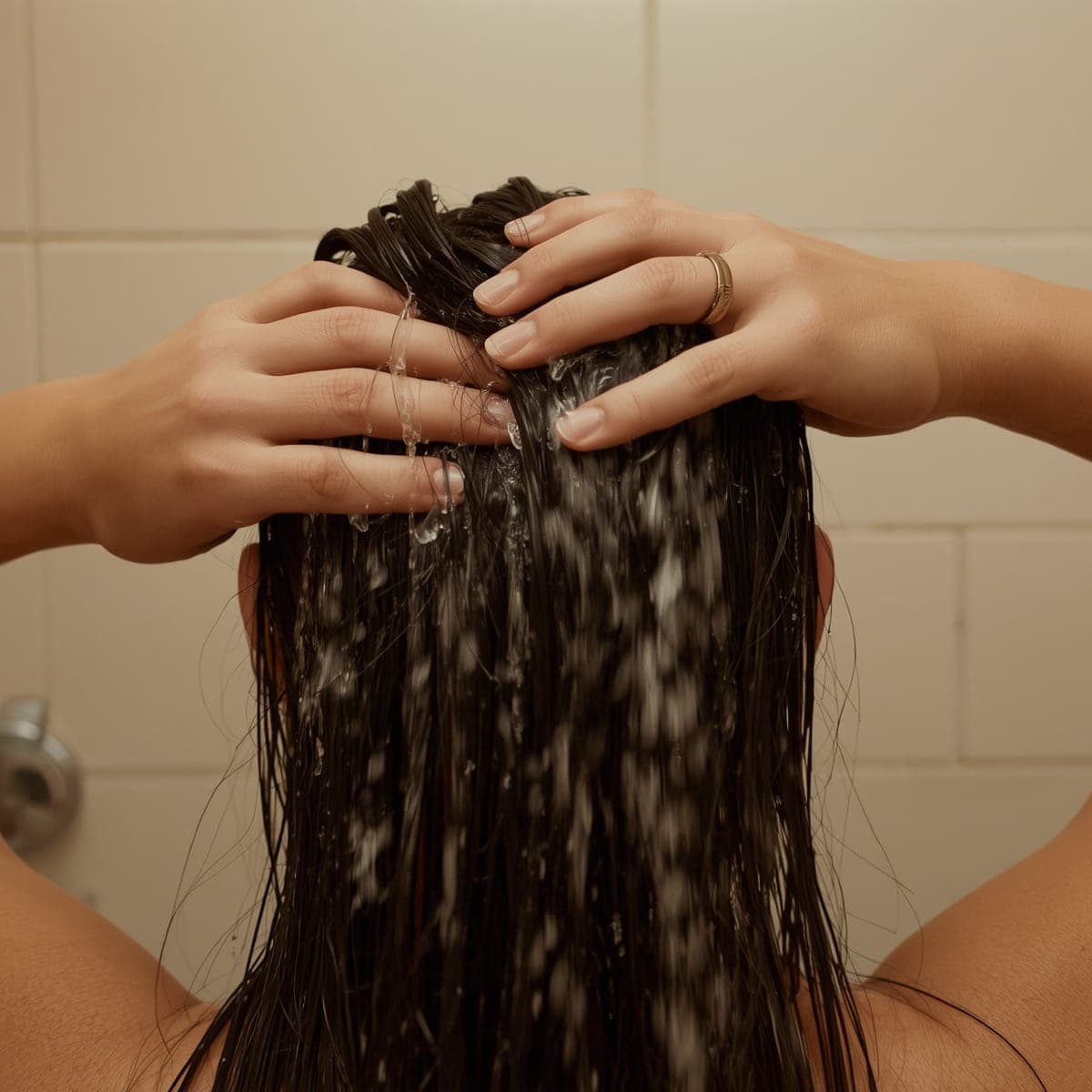
Start with what hard water does not do. On its own, it does not cause baldness. True hair loss is driven by genetics, hormones, thyroid and nutrition — not by the water you wash in. What hard and iron-rich water does do, and what the evidence actually supports, is weaken the hair shaft, roughen its surface, and leave it far more prone to breakage and shedding. Over months, that breakage looks and feels exactly like hair fall. The distinction matters, because it decides whether treating your water will help.
What "hard water" means here
Hard water carries a high load of dissolved minerals — calcium and magnesium, and across the borewell belts of eastern and suburban India, iron and manganese as well. Hardness is measured as calcium carbonate: below 60 ppm is soft, 60 to 120 moderately hard, 120 to 180 hard, above 180 very hard. Most borewell-fed homes in Kolkata, Bhubaneswar, Ranchi and the Terai run well past 250 ppm — and carry dissolved iron on top of it.
The Bureau of Indian Standards sets the acceptable limit for iron in drinking water at 0.3 ppm. Untreated borewell supply routinely runs several times higher. That is the water reaching the shower head every morning.
What the water does to hair
The research here is honest about its own limits — most of it tests hair strands in a lab rather than living follicles, so it shows what the water does to the hair, not to the growth process. But the pattern is consistent. Strands washed in hard water lose tensile strength: they snap under less force than strands washed in soft water. Wash hair in hard water for a month and it ends up measurably thinner, rougher and coated with mineral deposit.
The mechanism is not dramatic. Minerals settle on the cuticle, the cuticle stops lying flat, the strand loses moisture and elasticity, and weakened hair breaks when you comb, tie or towel it. Iron adds its own signature — the same orange residue that stains the basin clings to hair, dulling it and leaving treated or lighter hair looking brassy after a wash.
Hard water doesn't make hair fall out. It makes hair break — and over months, breakage is hard to tell apart from hair fall.
The scalp
The same deposits settle on the scalp, disrupting its moisture barrier and leaving it dry, flaky and itchy. For most people that is an irritation. For anyone living with eczema, psoriasis or seborrheic dermatitis, hard water tends to make it worse — the minerals react with soap to leave a residue that aggravates sensitive skin. A persistently unhealthy scalp is not a good place to grow hair.
How to tell it is the water
The signs show up around the house before they show up in the mirror:
- —Soap and shampoo that will not lather or rinse clean
- —Chalky white scale on taps, kettles, geysers and shower heads
- —Reddish or orange-brown stains on basins, tiles and the overhead tank
- —Skin that feels tight after a bath at home — but not when you travel
On the hair itself: a rough, coated feel even after conditioner; more breakage and split ends; dull or fast-fading colour; a dry, itchy scalp. If any of this started after you moved house, or switched from municipal supply to a borewell, the water is the first thing to test — not the last.
Is the damage reversible?
Usually, yes. Because hard and iron-rich water damages the hair shaft and the scalp environment rather than killing the follicle, healthy hair tends to return once the cause is removed — provided the follicles are intact and there is no medical reason behind the loss. The fix is upstream: treat the water, not the strand.
What actually fixes it
The dependable fix is to stop hard, iron-laden water from reaching any tap in the first place. A whole-house system softens out the calcium and magnesium that roughen hair and scale fittings, and an iron-removal stage takes out the dissolved iron that stains and dulls. Order matters — iron is removed first, because it fouls softening resin if it reaches it untreated. Treating at the inlet protects hair, skin, the geyser, the washing machine and the fittings at once.
Shower-head filters help a little, but they treat one tap and clog fast against the iron loads common in our region. Between treatments, a weekly clarifying wash with a chelating agent (EDTA or citric acid on the label) lifts mineral residue, a diluted lemon or vinegar rinse dissolves light buildup, and shorter, cooler showers spare the scalp its natural oils. These manage the symptom. The water is the cause.
This is the problem Uniwater is built around: we test your actual water first — hardness, iron and the rest — size the system to your readings rather than a catalogue, and service it monthly so it keeps performing.
When it is not the water
Be honest about the bigger picture. A receding hairline, a thinning crown, or distinct bald patches is almost certainly not hard water — it points to genetic or hormonal hair loss, thyroid trouble, or iron-deficiency anaemia, several of which are very treatable. Clean, soft water gives you stronger hair and a calmer scalp; it will not reverse genetic balding. If the fall is heavy or sudden, see a dermatologist or trichologist. Think of water treatment as removing one avoidable source of damage — not as a cure for every kind of hair loss.
Which brings it back to the one number nobody checks: what is actually in your water. A water survey reads your hardness and iron before you spend a rupee on a fix — and tells you whether your taps are part of the problem in the first place.