

Drinking water systems
The one tap where chemistry beats every other concern. RO or UF + UV is a 10-minute test, not a sales decision.
From ₹15,000. Final price after the free survey.
The problem this solves
What changes when the water is right.
Drinking water is a chemistry call: TDS above 500 ppm calls for RO; below 200, UF + UV. Anything in between needs a test, not a guess.
Re-mineralisation is not optional on RO. Bare RO strips calcium and magnesium, tastes flat, and isn’t healthier.
Bottled water for a family runs ₹12,000–18,000 a year. A kitchen system pays for itself within eighteen months.
On the counter, under the sink, or centralised at the plant. The kitchen layout decides the answer.

How we solve it
TDS decides the chemistry. The kitchen decides the rest.
TDS
decides RO vs UF + UV.
Household
decides single tap vs centralised.
Plumbing
decides under-sink vs counter.
A water test, not a sales pitch.
TDS decides the chemistry
Test the TDS first.

What’s included
Everything to put it in. Everything to keep it running.

Cartridge stack
RO + carbon + UV/UF as your TDS needs. Re-mineralised post-RO.

Dedicated tap + storage
Chrome under-sink tap or centralised reservoir. Food-grade plumbing throughout.

Installation
Plumbing, electrical, mounting, commissioning. Documented before handover.

Water analysis
Pre + post-install parameter readings. Repeated on every visit.

One-year warranty
All system components covered. Replacement, not repair-by-letter.

One-year AMC
Cartridge swap + membrane flush + TDS check on every visit.

Technical specifications
For the architect, plumber, or engineer.
Surface what matters; collapse what doesn’t. Open the rows below for the engineering detail.
Components from
Capacity & sizing
- Capacity range
- 15 — 100 LPH
- Service flow
- Sized to peak household draw
- Backwash flow
- 1.5× service flow
Materials & media
- Vessel
- FRP / SS316 (Plastic or Stainless Steel)
- Media
- Per-solution — selected at survey
- Internal piping
- CPVC / SS316
Controls & regeneration
- Mode
- Manual or Automatic
- Regeneration
- Timer-based or volumetric on Automatic models
- Indicators
- Pressure gauges; flow indicator on Automatic models
Installation requirements
- Inlet pressure
- 1.5 — 4.5 kg/cm²
- Power
- 230V AC for Automatic models; none for Manual
- Drain
- Adjacent to install location
- Space
- Sized per configuration; see install diagram
Take the spec to your architect.
A 2-page PDF data sheet with capacities, materials, dimensions, and the install diagram.

Frequently asked
What homeowners ask before they book.
How do I know whether I need RO or UF + UV?
What does "re-mineralised post-RO" mean? Is it healthier?
Do I need to know my TDS or hardness before booking a survey?
How long does installation take?
What if my supply chemistry changes over the years?
Can I see what the system would cost before the survey?
Is the AMC included? What does it cover?
Real installs
Where these systems are running today.
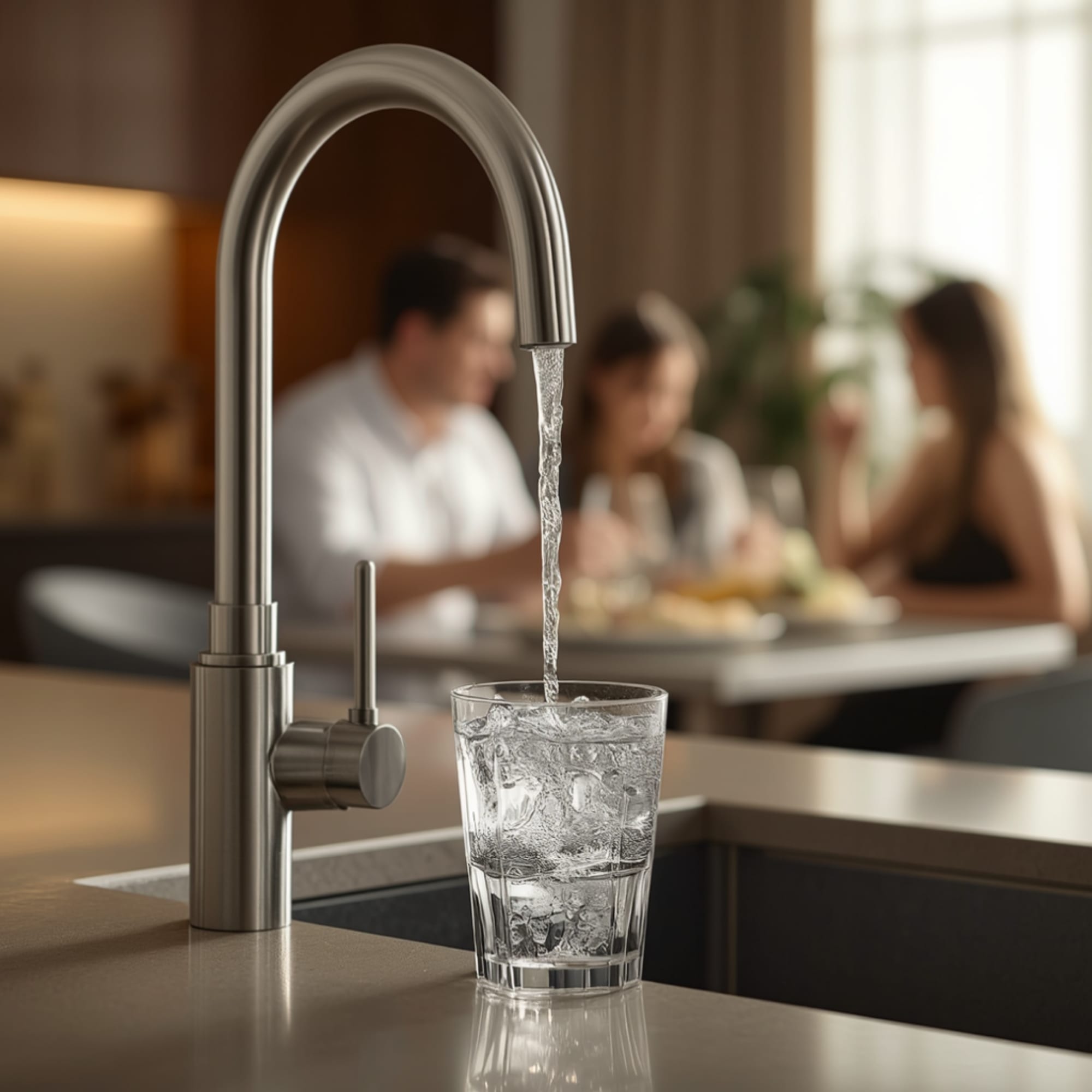
Family residence, Lake Town, Kolkata. Under-sink RO.
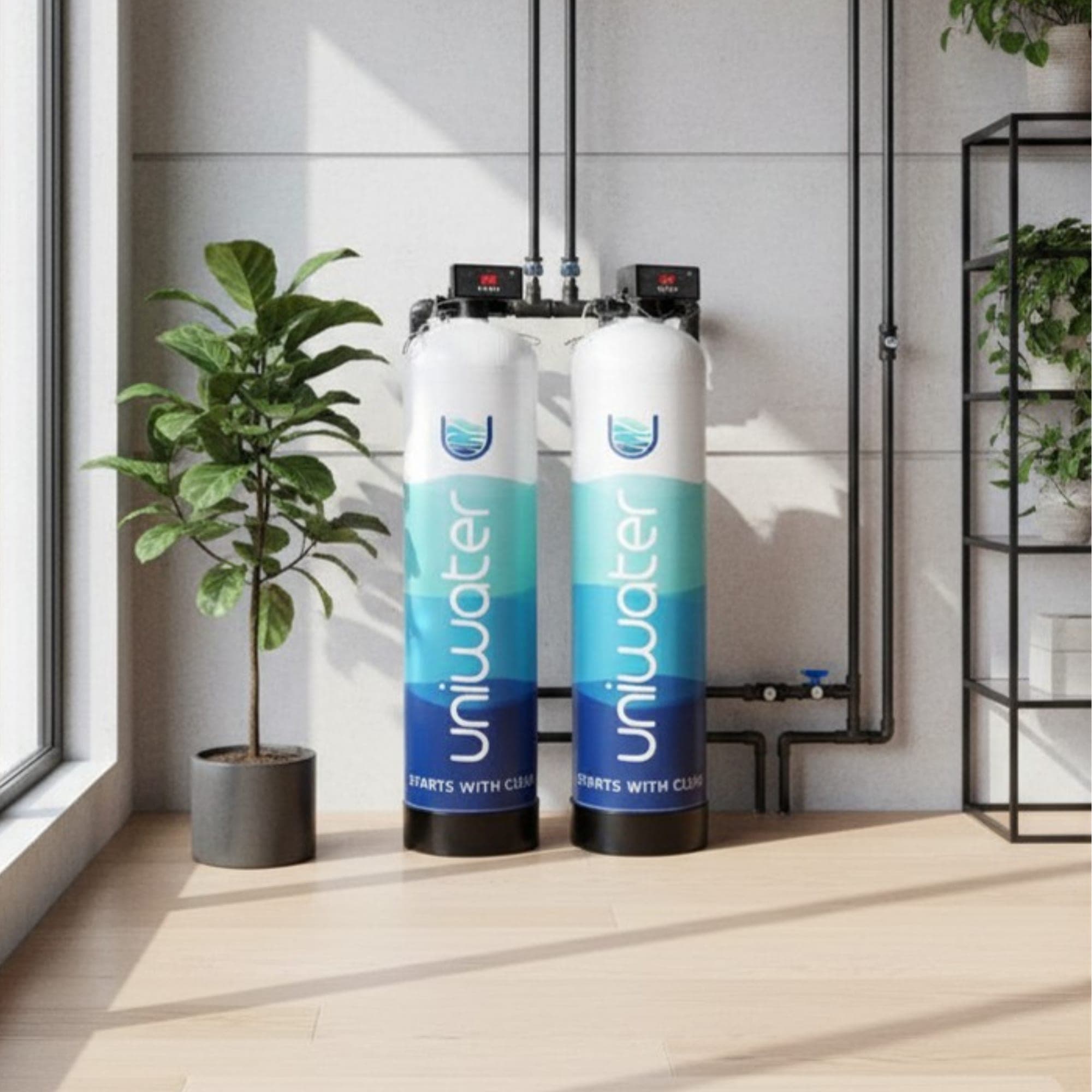
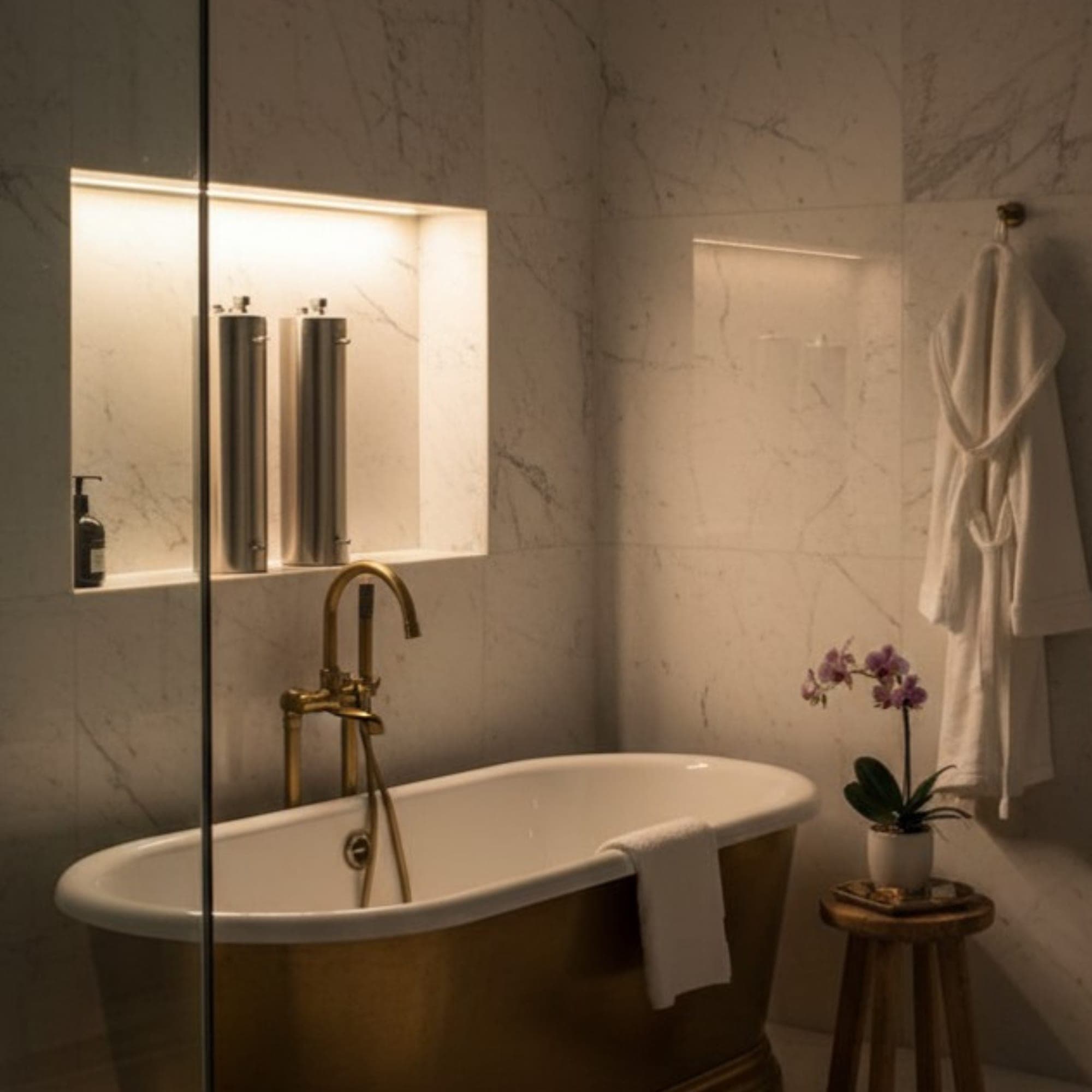
Apartment, Salt Lake, Kolkata. Centralised drinking-water unit.
Related reading
The thinking behind this system.
Pieces from the Journal that cover the chemistry, the decision, and the practice this solution rests on.
TDS isn't a quality metric. Here's what is.
Low TDS is not purer. High TDS is not dirtier. What total dissolved solids actually measures, and the parameter that matters more.
Re-mineralisation after RO: why it matters
RO strips everything. Re-mineralisation adds back what the body and the taste need. The post-RO stage that turns flat water into real water.
How to read a water test report
TDS, hardness, iron, pH, FRC — five numbers that decide what your water needs. What each one measures, what the thresholds mean, and what to ask the tester.
Your next step
Ready when you are.
Tell us about your home. We’ll come to you.