
India
Uniwater in Kolkata.
Our home city. Treated municipal in central Kolkata; borewell augmentation common across the EM Bypass suburbs.
The water
What Kolkata water actually looks like.
Salt Lake, Rajarhat, and New Town run on a mix of municipal and borewell. Arsenic risk in some suburban borewells — testing matters. Central Kolkata is largely treated supply; hardness moderate, iron usually low.
Service areas
Where we’re active in Kolkata.
Not an exhaustive list. If your locality isn’t mentioned, we likely still serve it — the survey response is the same.
Ballygunge
Alipore
Park Street
Salt Lake
New Town
Rajarhat
Lake Town
Tollygunge
Behala
Hindustan Park
Water by locality
What the water reads, area by area in Kolkata.
Indicative ranges only — Kolkata from our field experience, other cities from published regional groundwater studies. Groundwater varies borehole to borehole, so the number that sizes your system is the one our engineer measures at your address, not the band below.
| Locality | Supply | Iron | Hardness | TDS | Dominant issue | Typical system |
|---|---|---|---|---|---|---|
| Park Street | KMC treated | <0.3 ppm | 100–180 ppm | 180–320 ppm | Mild scale | BathSoft / Drinking |
| Alipore | KMC treated | <0.3 ppm | 120–200 ppm | 200–350 ppm | Light scale, taste | BathSoft / Drinking |
| Ballygunge | KMC treated | <0.3 ppm | 120–200 ppm | 200–350 ppm | Light scale | BathSoft / Drinking |
| Hindustan Park | KMC treated | <0.3 ppm | 120–200 ppm | 200–350 ppm | Light scale | BathSoft / Drinking |
| Tollygunge | KMC + borewell | 0.3–1 ppm | 150–280 ppm | 300–500 ppm | Scale, occasional staining | HomeSoft + BathSoft |
| Lake Town | Mixed | 0.5–2 ppm | 200–350 ppm | 350–650 ppm | Staining + scale | Iron filter + HomeSoft |
| Behala | Borewell/mixed | 0.5–2 ppm | 200–350 ppm | 350–650 ppm | Yellow staining, scale | Iron filter + HomeSoft |
| Salt Lake | Borewell/mixed | 0.5–3 ppm | 200–400 ppm | 400–800 ppm | Yellow stains, metallic taste, scale | Iron filter + HomeSoft |
| Rajarhat | Borewell | 0.8–3.5 ppm | 250–450 ppm | 500–900 ppm | Heavy staining + scale | Iron filter + HomeSoft |
| New Town | Borewell | 0.8–3.5 ppm | 250–450 ppm | 500–900 ppm | Heavy staining + scale | Iron filter + HomeSoft |
Park Street
Supply: KMC treated
- Iron
- <0.3 ppm
- Hardness
- 100–180 ppm
- TDS
- 180–320 ppm
Mild scale
BathSoft / Drinking
Alipore
Supply: KMC treated
- Iron
- <0.3 ppm
- Hardness
- 120–200 ppm
- TDS
- 200–350 ppm
Light scale, taste
BathSoft / Drinking
Ballygunge
Supply: KMC treated
- Iron
- <0.3 ppm
- Hardness
- 120–200 ppm
- TDS
- 200–350 ppm
Light scale
BathSoft / Drinking
Hindustan Park
Supply: KMC treated
- Iron
- <0.3 ppm
- Hardness
- 120–200 ppm
- TDS
- 200–350 ppm
Light scale
BathSoft / Drinking
Tollygunge
Supply: KMC + borewell
- Iron
- 0.3–1 ppm
- Hardness
- 150–280 ppm
- TDS
- 300–500 ppm
Scale, occasional staining
HomeSoft + BathSoft
Lake Town
Supply: Mixed
- Iron
- 0.5–2 ppm
- Hardness
- 200–350 ppm
- TDS
- 350–650 ppm
Staining + scale
Iron filter + HomeSoft
Behala
Supply: Borewell/mixed
- Iron
- 0.5–2 ppm
- Hardness
- 200–350 ppm
- TDS
- 350–650 ppm
Yellow staining, scale
Iron filter + HomeSoft
Salt Lake
Supply: Borewell/mixed
- Iron
- 0.5–3 ppm
- Hardness
- 200–400 ppm
- TDS
- 400–800 ppm
Yellow stains, metallic taste, scale
Iron filter + HomeSoft
Rajarhat
Supply: Borewell
- Iron
- 0.8–3.5 ppm
- Hardness
- 250–450 ppm
- TDS
- 500–900 ppm
Heavy staining + scale
Iron filter + HomeSoft
New Town
Supply: Borewell
- Iron
- 0.8–3.5 ppm
- Hardness
- 250–450 ppm
- TDS
- 500–900 ppm
Heavy staining + scale
Iron filter + HomeSoft
BIS acceptable limits (IS 10500): iron 0.3, hardness 200, TDS 500 mg/L.
Read further
Iron in Kolkata water — the long read.
Why central KMC localities read low while Salt Lake, New Town, and Rajarhat run high; how iron has to be removed before softening; and why “zero-maintenance” iron filters fail.
The team
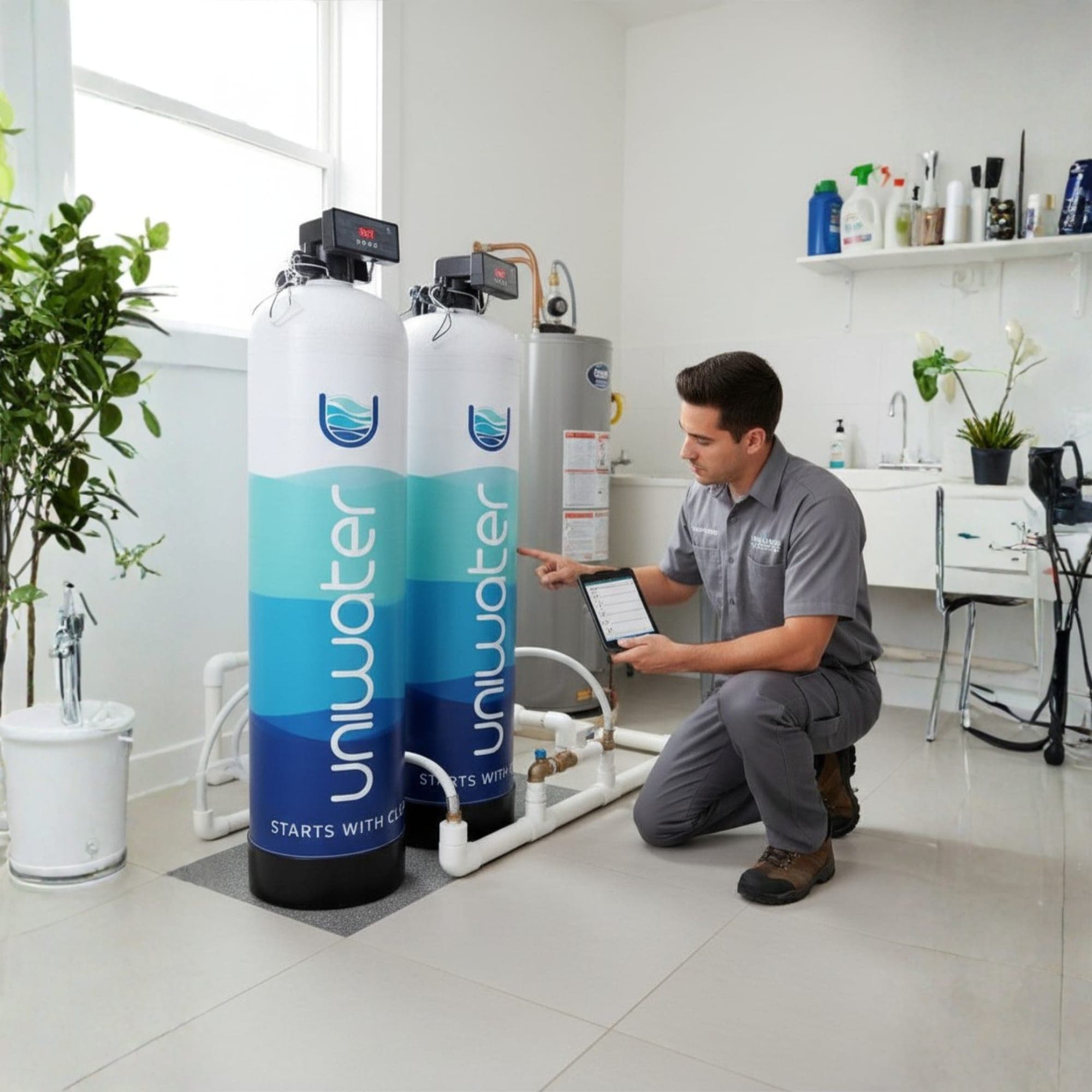
Local engineers. Not subcontracted.
Head office in Shribhumi, Kolkata. Survey response within 24 hours across the city; engineer team based locally, not subcontracted.
Real installs
Recent installs in Kolkata.
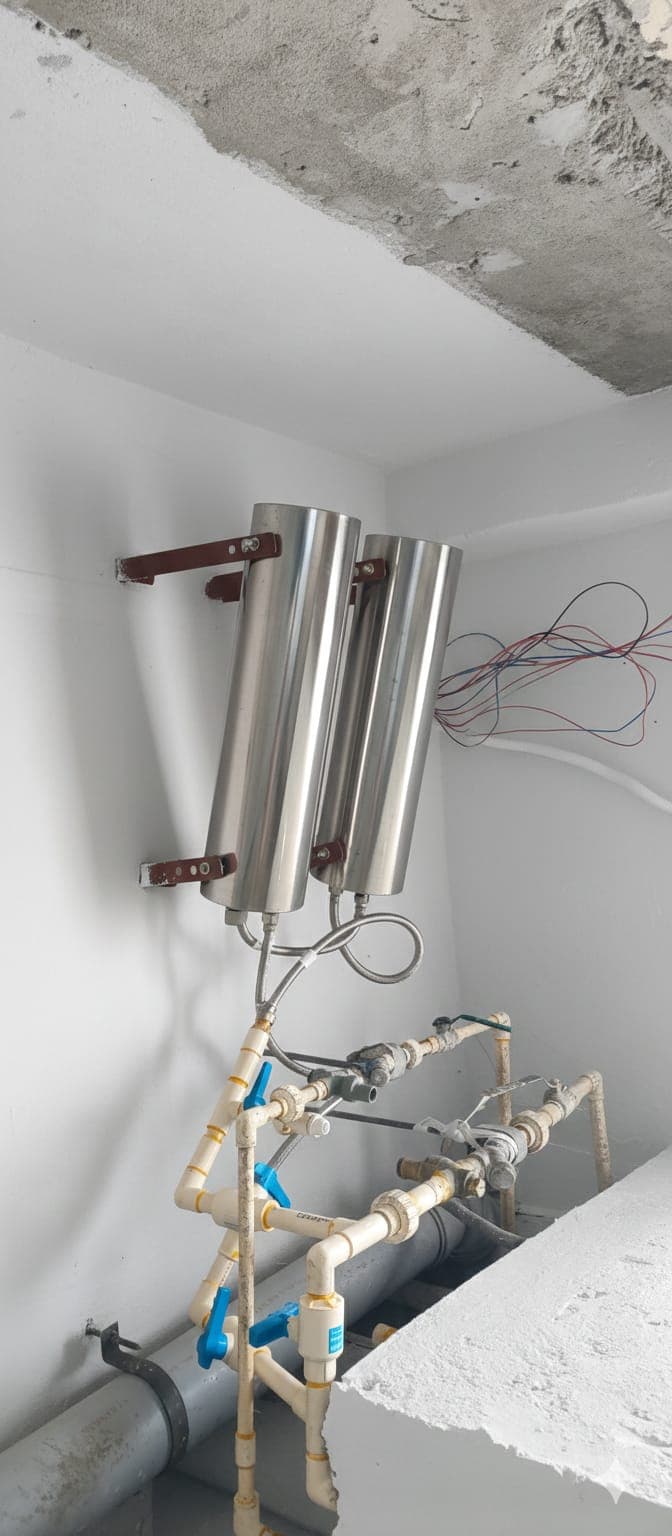
Ballygunge
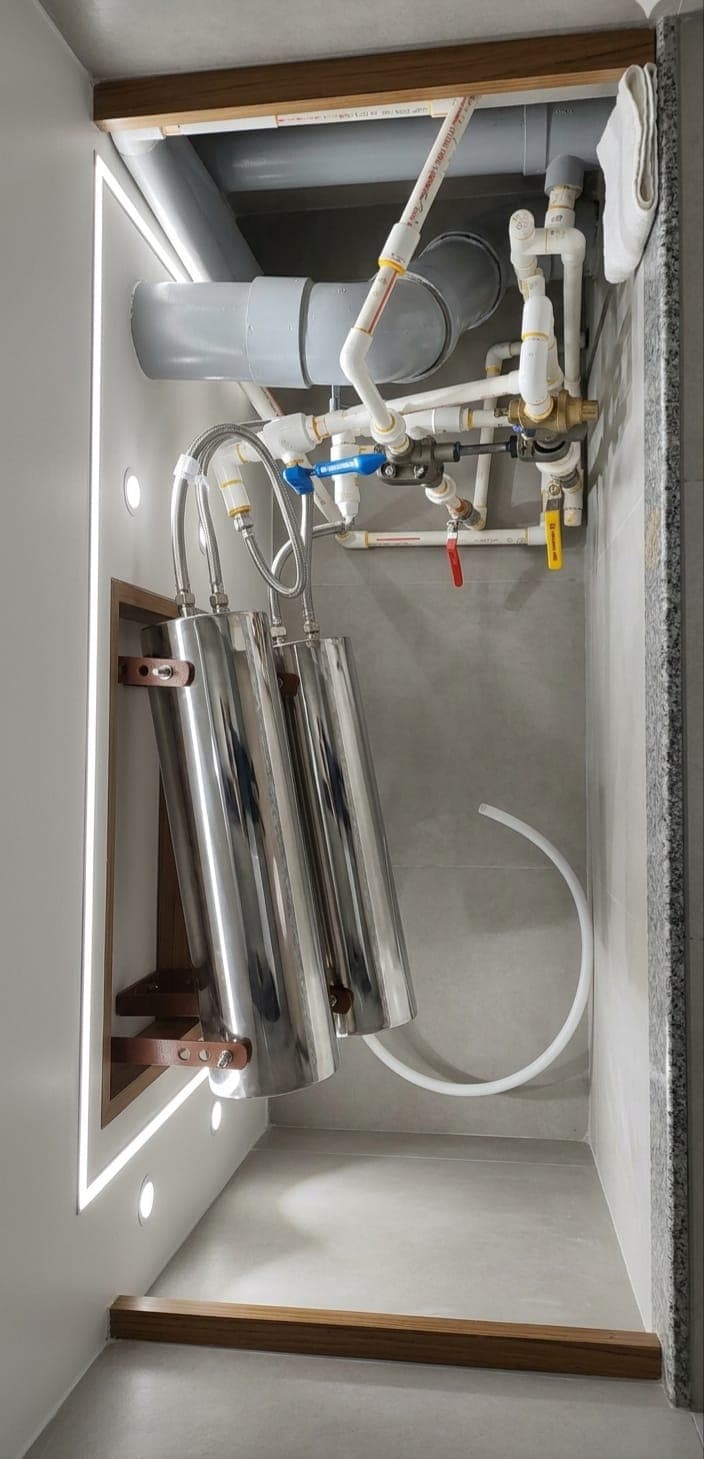
Alipore
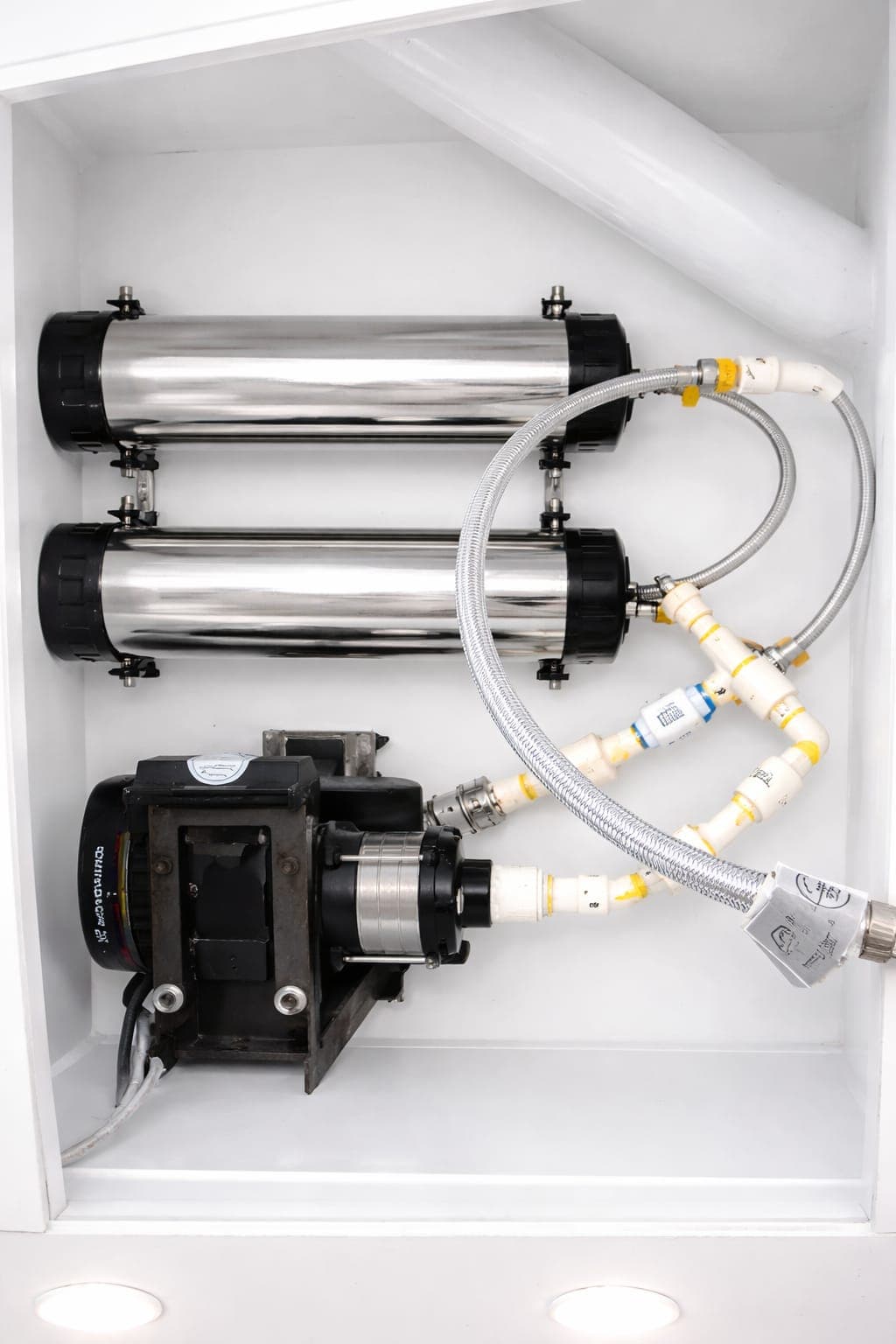
Park Street
Systems we install here
What goes into a Kolkata home, typically.
The right answer comes from the survey, not the catalogue. These are the four systems most commonly specified in Kolkata, in order of how often they appear on installation invoices.
HomeSoft
One softened, filtered supply for the whole house. Every shower, every sink, every appliance.
BathSoft
A bathroom filter has to do three things at once: treat the water, fit the space, not announce itself.
Drinking water systems
The one tap where chemistry beats every other concern. RO or UF + UV is a 10-minute test, not a sales decision.
Charnock Hospital
Drinking-water RO at point of use, building inlet WTP, monthly AMC.

Frequently asked
Water questions, answered for Kolkata.
Does a water softener remove iron?
Why does my water turn yellow / orange after standing?
Iron remover vs water softener — which do I need?
Is borewell water in Salt Lake / New Town / Rajarhat safe?
How often does the system need servicing?
Service is the system
Most water companies show up when something breaks. We show up every month.
Automated.
Backwash, regeneration, flush — the system handles routine cycles on a schedule. No valves to turn.
Verified by an engineer.
Monthly site visit. Pressure check, media inspection, hardness/iron spot test, written report.
Owned by us.
If something needs replacement or recalibration, we do it. No customer chasing parts.
The discipline that decides year four.
Your next step
Ready for a free survey in Kolkata?
A Uniwater engineer will visit, test your water, and respond within one business day.