
Standard — quarterly
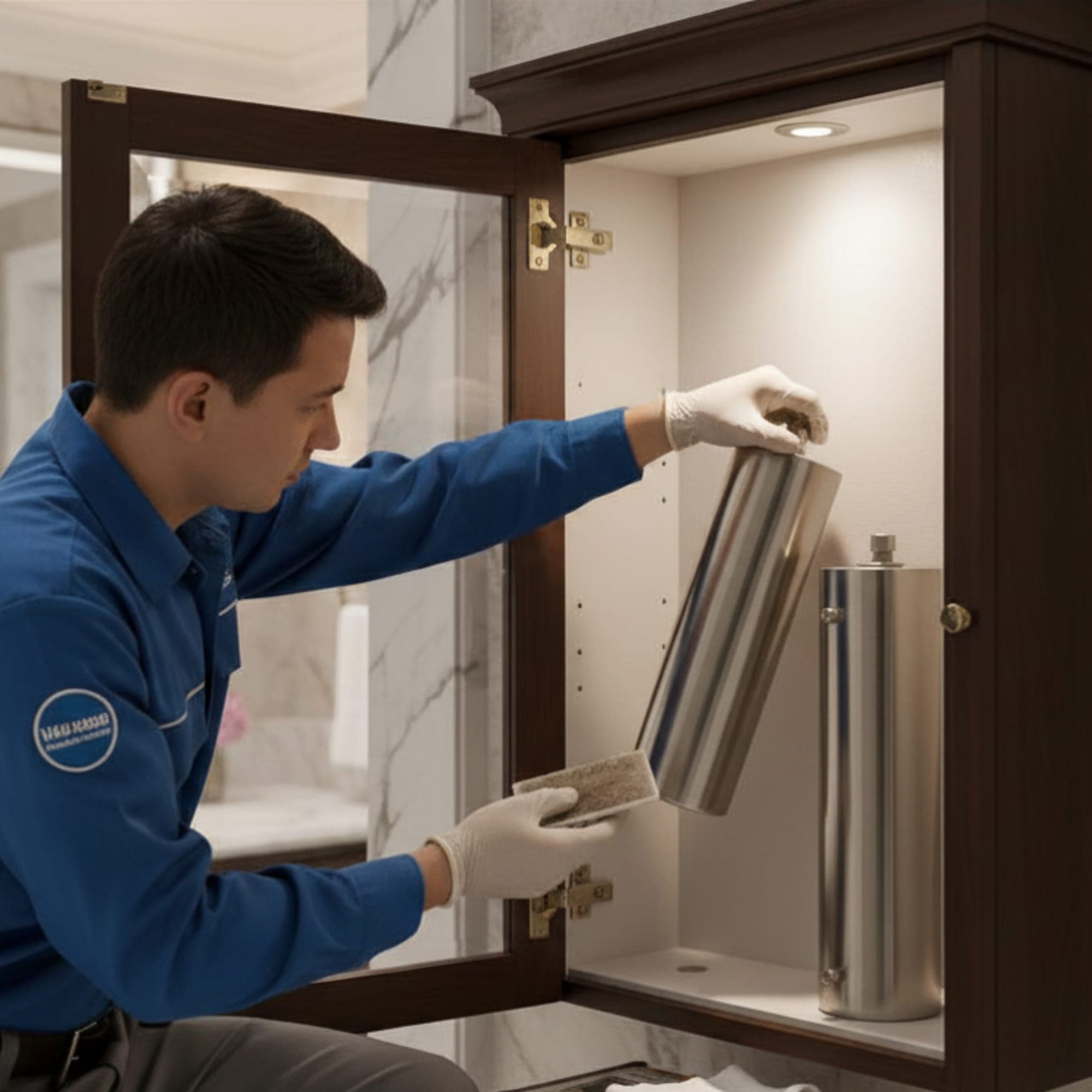
The Standard tier ships with four scheduled preventive visits a year. Each visit follows the full Before / On site / After protocol — parameter testing, media inspection, salt top-up, pressure check, written report. Between visits, the customer has on-call response with a forty-eight-hour SLA on flagged faults.
Standard is the right tier for low-load installations on stable water chemistry. A 1 to 2 BHK apartment on treated municipal supply with no iron, moderate hardness, and a single bathroom-level filter does not need more than quarterly attention. Standard delivers the operational discipline without paying for capacity the system does not consume.
Comprehensive — monthly
The Comprehensive tier is twelve scheduled visits a year. Same protocol, more frequent. Media replacement happens on schedule rather than on complaint. Salt and resin top-ups are included rather than charged separately. The SLA on flagged faults tightens to twenty-four hours.
Comprehensive is the right tier for borewell-fed homes, any system with iron pre-treatment, any system with variable supply, and any home where the homeowner wants the relationship to be invisible. Most premium residential customers select Comprehensive. The marginal cost over Standard pays for itself in caught-early flags that would otherwise become household disruptions.
Premium — monthly plus priority
The Premium tier is Comprehensive plus a named engineer for the contract life, a customer dashboard with parameter trends, a twelve-hour SLA on flagged faults, and an annual independent water analysis at the end of each contract year.
Premium is the right tier for institutions, large complexes, and customers who treat their water as infrastructure rather than utility. Hospitals, hotels, and large villas usually run Premium because their water is part of the operational baseline they cannot afford to have drift quietly.
Monthly preventive service lives in Comprehensive and Premium. Standard gets quarterly. We promise what we can scale.
Why monthly matters
The difference between quarterly and monthly service is not the frequency — it is the granularity of the parameter record. Quarterly gives four data points a year. Monthly gives twelve. With four data points, a slow drift in resin capacity or a seasonal iron spike is often not visible until the symptoms have appeared at the tap. With twelve, the same drift shows up at month five and gets fixed by month six, before the homeowner ever notices.
The compounding effect of monthly service across a decade is what produces a fifteen-year system instead of a five-year one. It is also what produces a customer relationship that the homeowner does not have a reason to evaluate alternatives for. That is the moat. That is the discipline that decides year four.