
Point-of-use: when it fits
Point-of-use treatment is the right answer for a one or two-bedroom apartment with a single problem location — usually the master bathroom — and a separate kitchen drinking-water need. Total system cost runs ₹30,000 to ₹70,000 for a BathSoft Mono or Duo plus a kitchen RO. Installation is fast, requires no plumbing-route changes, and disrupts no finished interior.
The pattern stops working when the home has multiple bathrooms. A three-bathroom flat with hard-water symptoms across all three needs three bathroom filters — and three monthly service relationships. The economics flip somewhere around bathroom three. At four bathrooms, whole-house treatment is unambiguously cheaper across the system's lifetime, even before counting service complexity.
Whole-house: when it fits
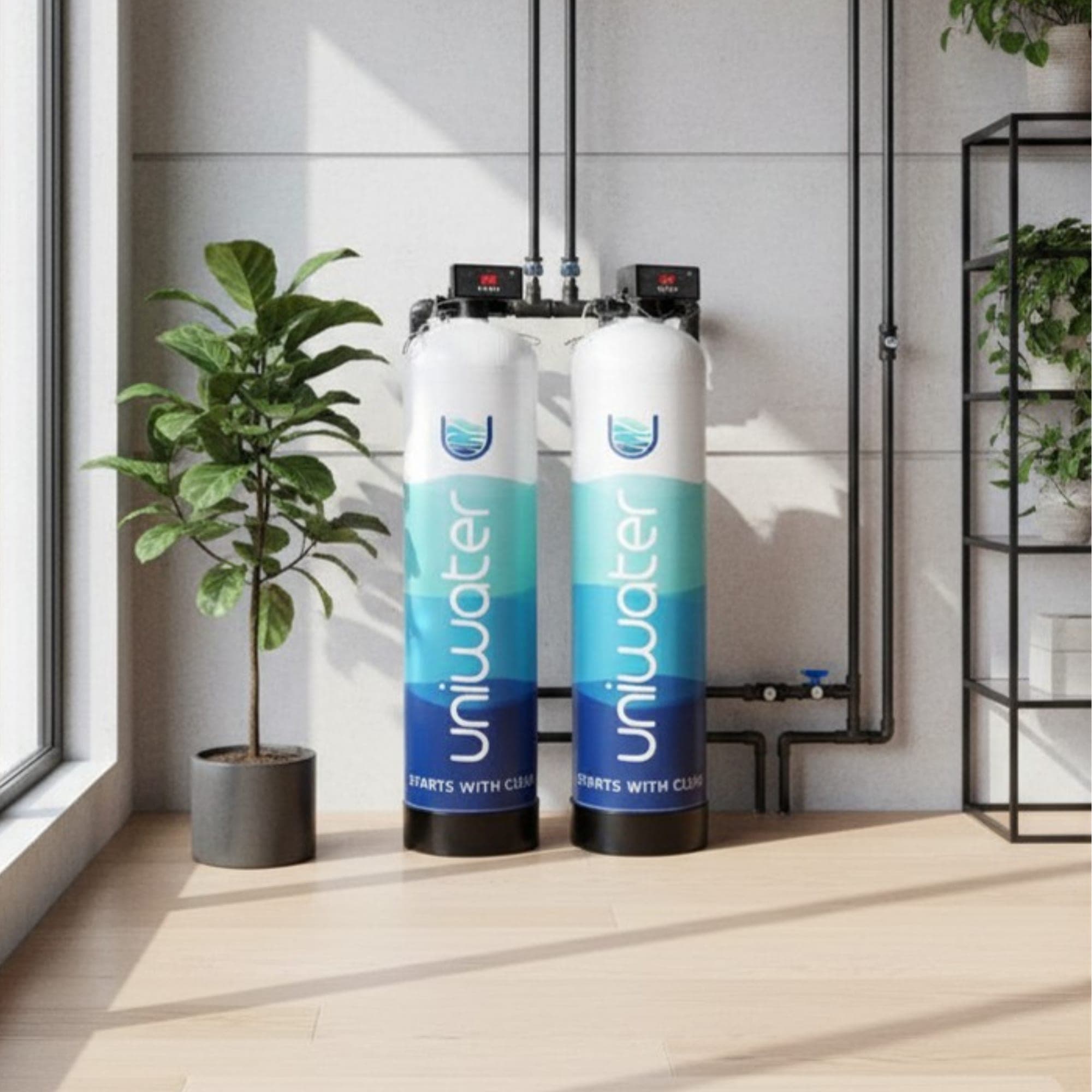
Whole-house treatment is the right answer for any home with four or more bathrooms, any home with appliances connected to the central plumbing (washing machines, dishwashers, garden taps), and any home where the homeowner wants softened water at every tap rather than just the bathrooms. Total system cost runs ₹50,000 to ₹3,00,000 for a HomeSoft 2K to 6K LPH four-stage train.
The argument for whole-house is not just the bathrooms. It is the dishwasher, the washing machine, the garden tap, the kitchen utility sink — every appliance and tap downstream of the inlet inherits softened, filtered water. Geyser scaling slows. Washing machine cycles shorten. CP fittings everywhere last longer. The single point of service is also a single AMC relationship rather than three to five separate ones.
The grey zone
A two-to-three bathroom flat with hard water but no iron and no drinking-water issue sits in the grey zone. The decision usually comes down to two questions: are appliances showing wear? and is there a third bathroom likely to be added or refinished in the next five years? Yes to either, whole-house. No to both, per-bathroom is fine.
Per-flat point-of-use systems mean per-flat service. One inlet means one contract. For multi-bathroom homes, that is the right design.
How the survey decides
A free site survey runs the water test, counts the bathrooms and the appliance load, walks the plumbing routes, and identifies install locations. The recommendation that follows is grounded in three numbers — feed-water chemistry, peak household draw, available install space — not in a catalogue tier. Two homes with identical bathroom counts often end up with different recommendations because the chemistry or the plumbing forces different answers. The survey is where the design happens. The catalogue is where the budget gets confirmed.