
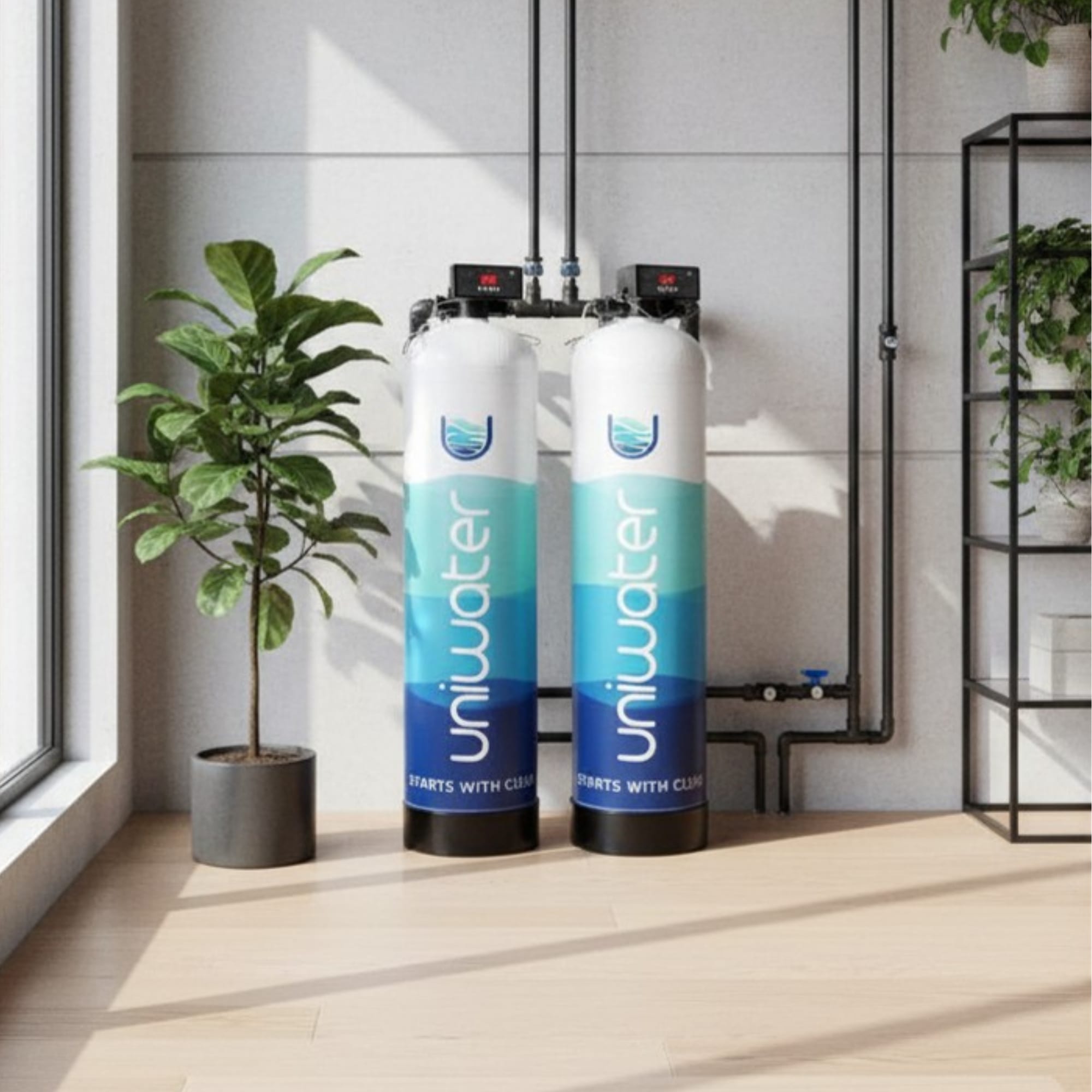
HomeSoft.
One softened, filtered supply for the whole house. Every shower, every sink, every appliance.
From ₹50,000. Final price after the free survey.
The problem this solves
What changes when the water is right.
Treating water tap-by-tap means six service contracts. Treating at the inlet means one.
Geysers, washing machines, dishwashers fail early on hard or iron-bearing water.
BathSoft helps the bathroom. The kitchen sink, the washing machine, the garden tap still get raw supply.
Borewell-fed homes need iron removal upstream of everything else. Or everything else fails faster.

How we solve it
Sized to the water, the house, and the people in it.
Chemistry
decides the media.
Household
decides the capacity.
Architecture
decides where it goes.
Engineered, not bought off a shelf.
Inside the vessel
The engineering, in section.
What the system looks like on the cutaway. Media bed, distributor, freeboard, control head — the visible engineering that decides what the water does over the next fifteen years.
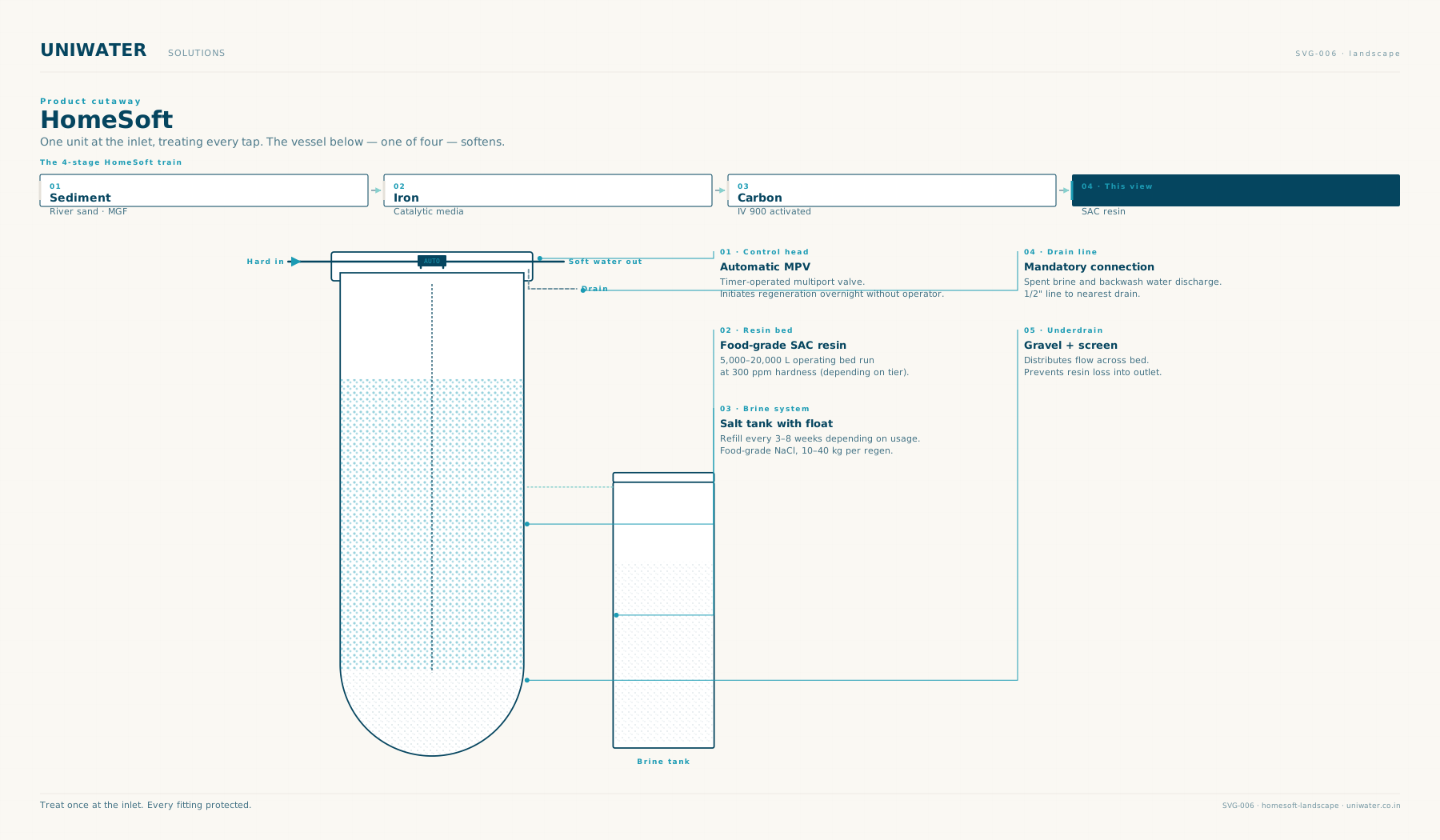
The four-stage train
Sediment. Iron. Carbon. Softening.

What’s included
Everything to put it in. Everything to keep it running.

Four-stage train
Sediment + iron + carbon + softening. 2K / 4K / 6K LPH per house.

Brine tank + controls
Salt reservoir for softener regeneration. Manual or automatic per configuration.

Installation
Plumbing, electrical, mounting, commissioning. Documented before handover.

Water analysis
Pre + post-install parameter readings. Repeated on every visit.

One-year warranty
All system components covered. Replacement, not repair-by-letter.

One-year AMC
Monthly visit on Comprehensive. Salt top-up rolled in; no separate bill.

Where it goes
Five places it goes.
HomeSoft treats every tap from a single point. Five canonical install locations -- decided at survey, against the house.
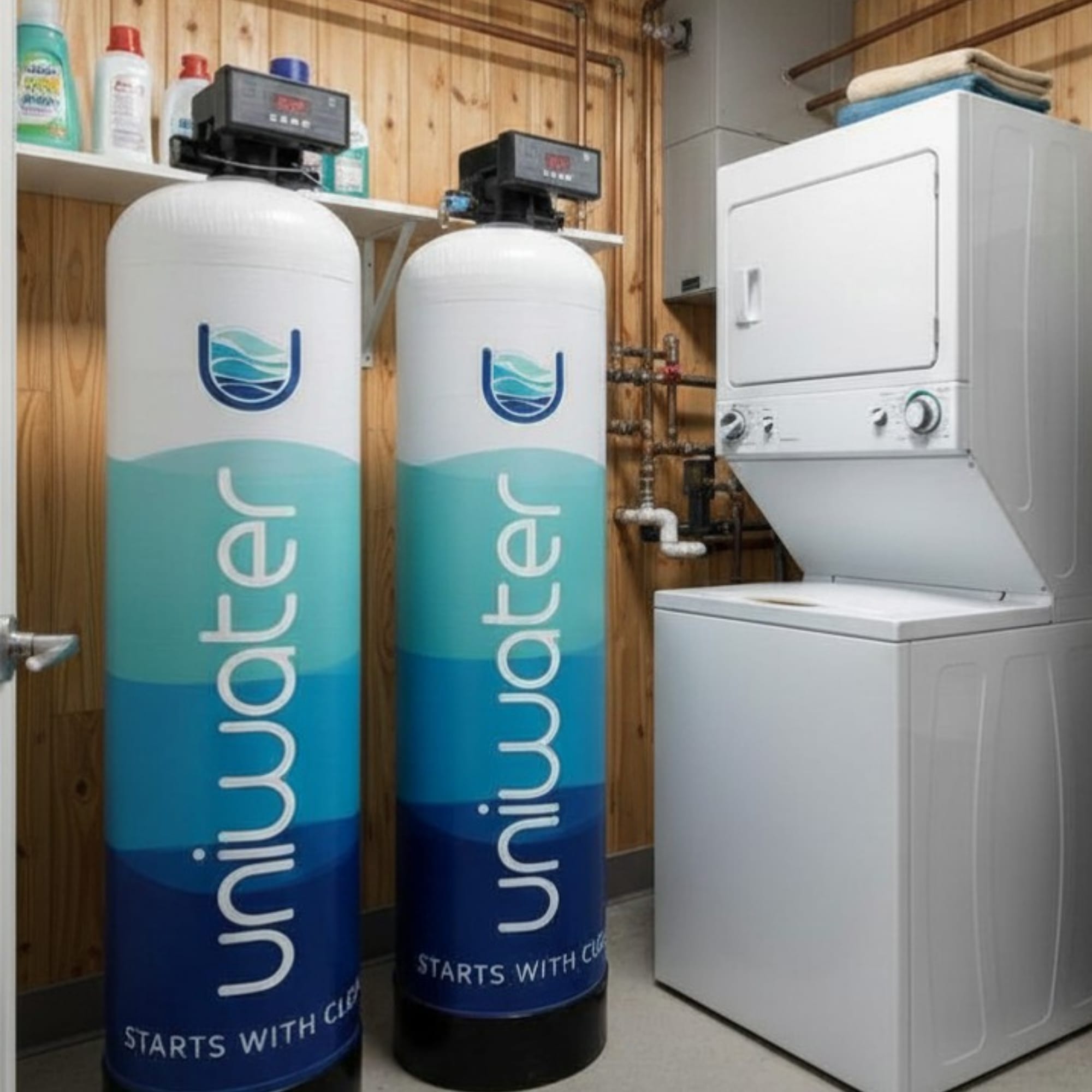
Utility room
Indoor controlled environment. Service access on day one.
Balcony
Behind a service door or cabinet. Apartment installs where there is no utility area.
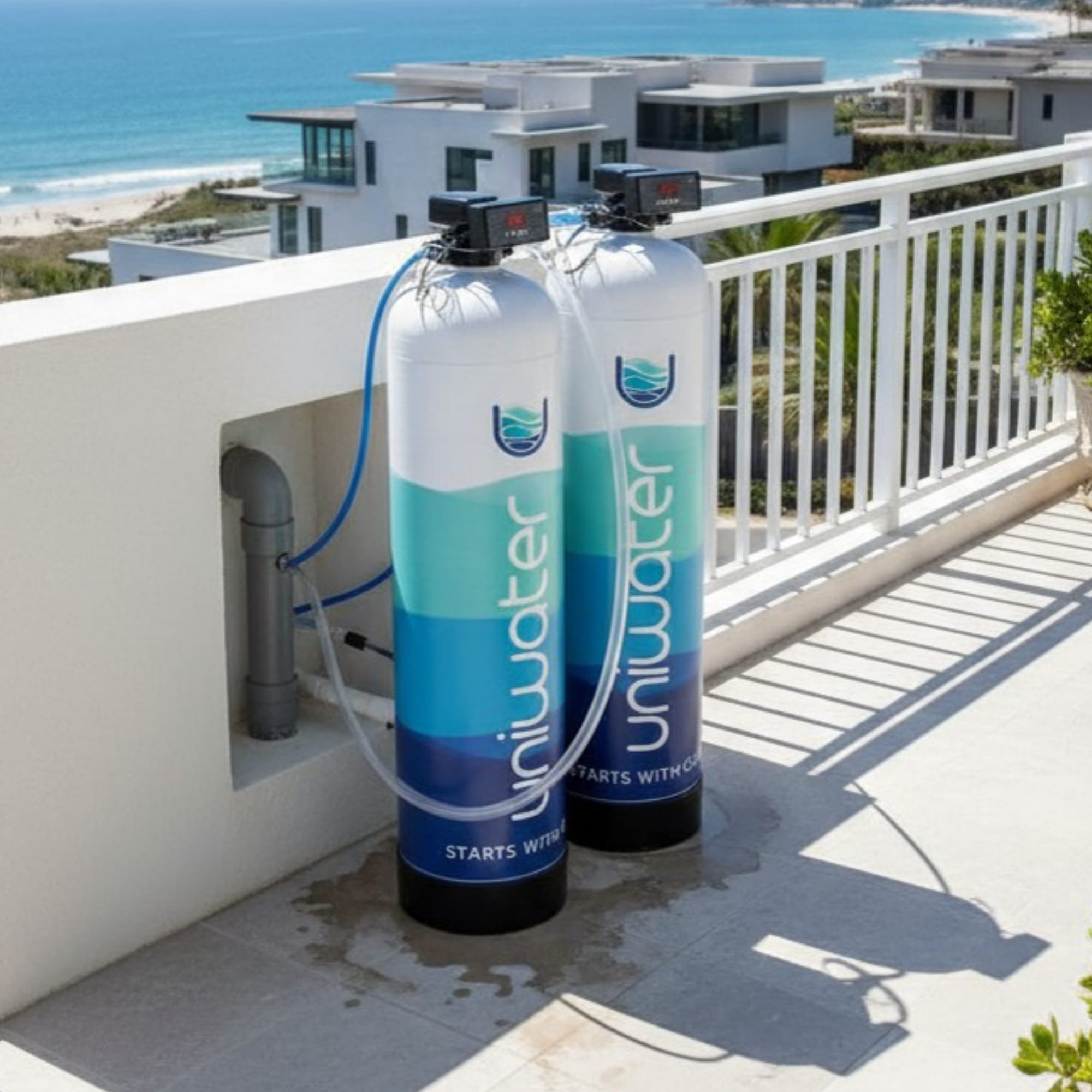
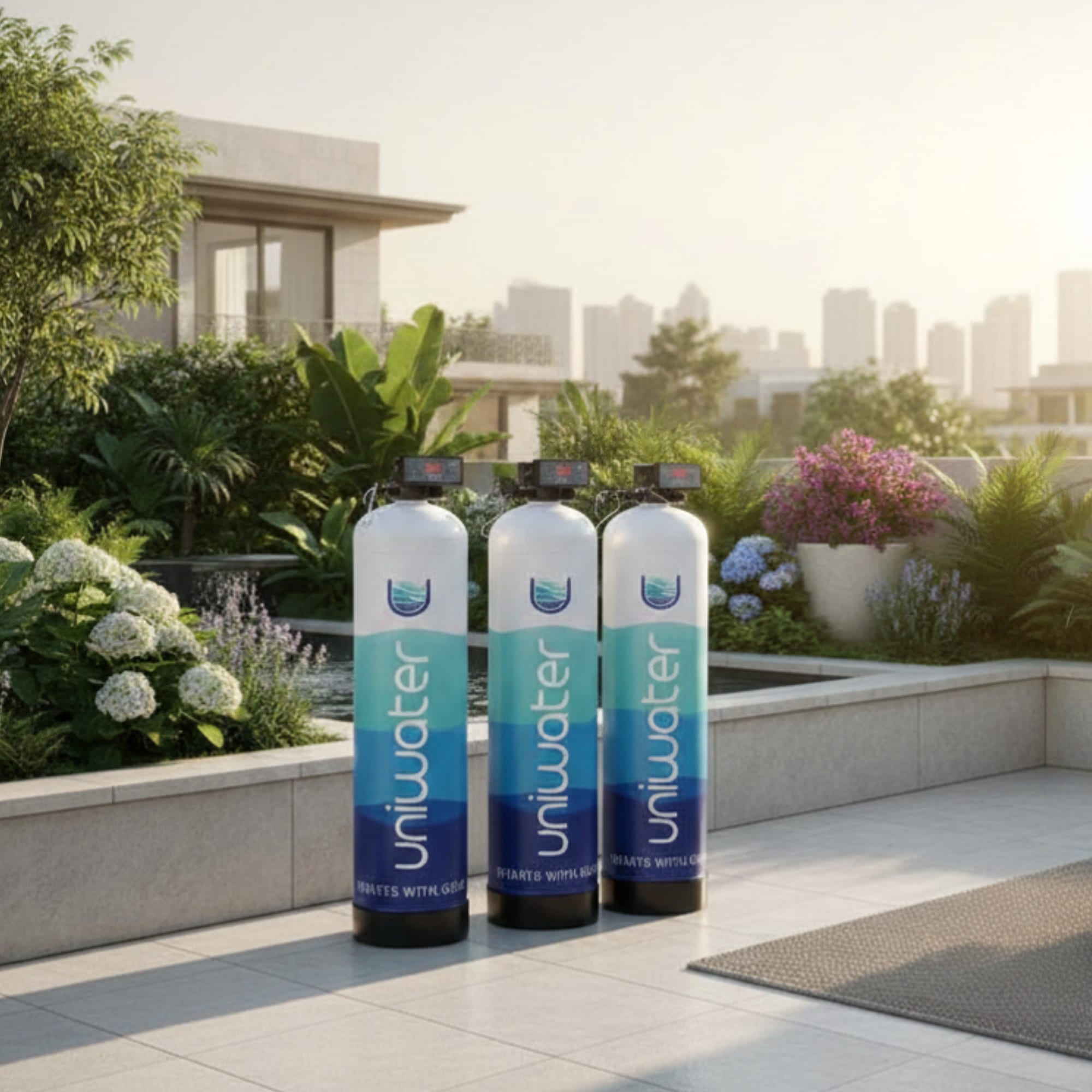
Terrace
Gravity-feed from the OHT. Weather hood + drain provisioned at survey.
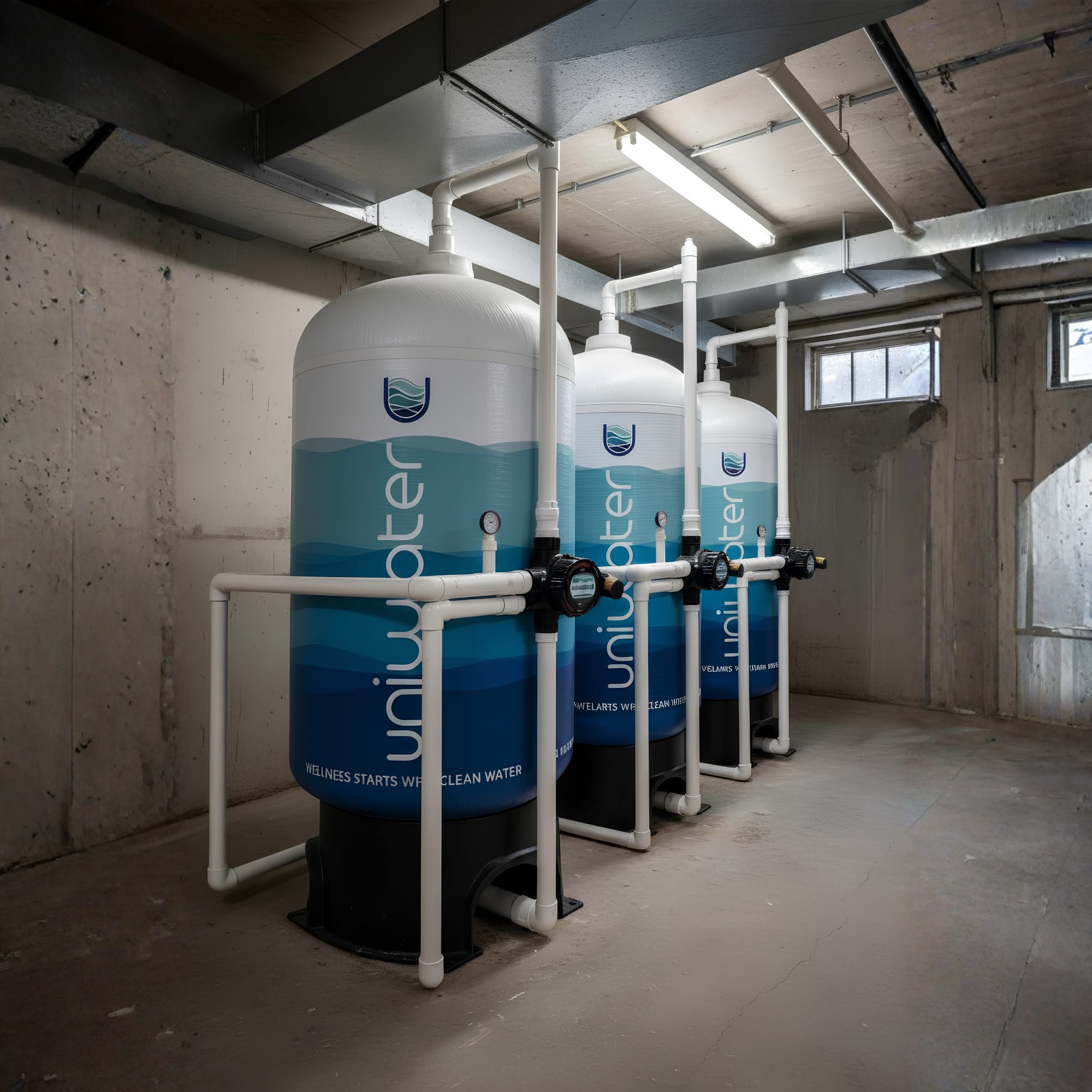
Basement
Villa plant rooms. Full four-stage train + sump-pit backwash routing.
Custom cabinet
Joinery-grade enclosure designed with the architect — the plant fits the house.
Configurations
Three or four sizes. Decided by load, not by SKU.
We don’t expose part numbers. The configuration is decided at survey based on bathroom count, household draw, and water chemistry.
2K
2,000 LPH
3–4 bathroom homes. Mid-rise apartment, compact villa.
4K
4,000 LPH
5–6 bathrooms, small villas with utility loads.
6K
6,000 LPH
Large villas, duplexes, garden draw. Highest residential capacity.

Technical specifications
For the architect, plumber, or engineer.
Surface what matters; collapse what doesn’t. Open the rows below for the engineering detail.
Components from
Capacity & sizing
- Capacity range
- 2,000 — 6,000 LPH
- Service flow
- Sized to peak household draw
- Backwash flow
- 1.5× service flow
Materials & media
- Vessel
- FRP / SS316 (Plastic or Stainless Steel)
- Media
- Per-solution — selected at survey
- Internal piping
- CPVC / SS316
Controls & regeneration
- Mode
- Manual or Automatic
- Regeneration
- Timer-based or volumetric on Automatic models
- Indicators
- Pressure gauges; flow indicator on Automatic models
Installation requirements
- Inlet pressure
- 1.5 — 4.5 kg/cm²
- Power
- 230V AC for Automatic models; none for Manual
- Drain
- Adjacent to install location
- Space
- Sized per configuration; see install diagram
Take the spec to your architect.
A 2-page PDF data sheet with capacities, materials, dimensions, and the install diagram.

Frequently asked
What homeowners ask before they book.
What are the four stages of the HomeSoft train?
How much space does a 2K / 4K / 6K LPH plant need?
Do I need to know my TDS or hardness before booking a survey?
How long does installation take?
What if my supply chemistry changes over the years?
Can I see what the system would cost before the survey?
Is the AMC included? What does it cover?
Real installs
Where these systems are running today.
Premium apartment, Salt Lake, Kolkata. Utility-room install.
Independent villa, Patia, Bhubaneswar. Basement plant.
Penthouse, New Town, Kolkata. Terrace install with gravity feed.

Related reading
The thinking behind this system.
Pieces from the Journal that cover the chemistry, the decision, and the practice this solution rests on.
Iron, hardness, and the order they should be treated in
Iron, calcium-magnesium, particulate. Treating them in the wrong order rebuilds the softener inside a year. The right order, explained.
Whole-house vs point-of-use: a decision tree
Two treatment patterns, very different costs and right-fits. When per-bathroom works, when whole-house works, and how the survey decides.
The five-year cost of doing nothing
Geysers replaced. Marble re-polished. Shower heads dulled. Dishwasher on its second service. The cumulative bill for ignoring water chemistry.
Your next step
Ready when you are.
Tell us about your home. We’ll come to you.